
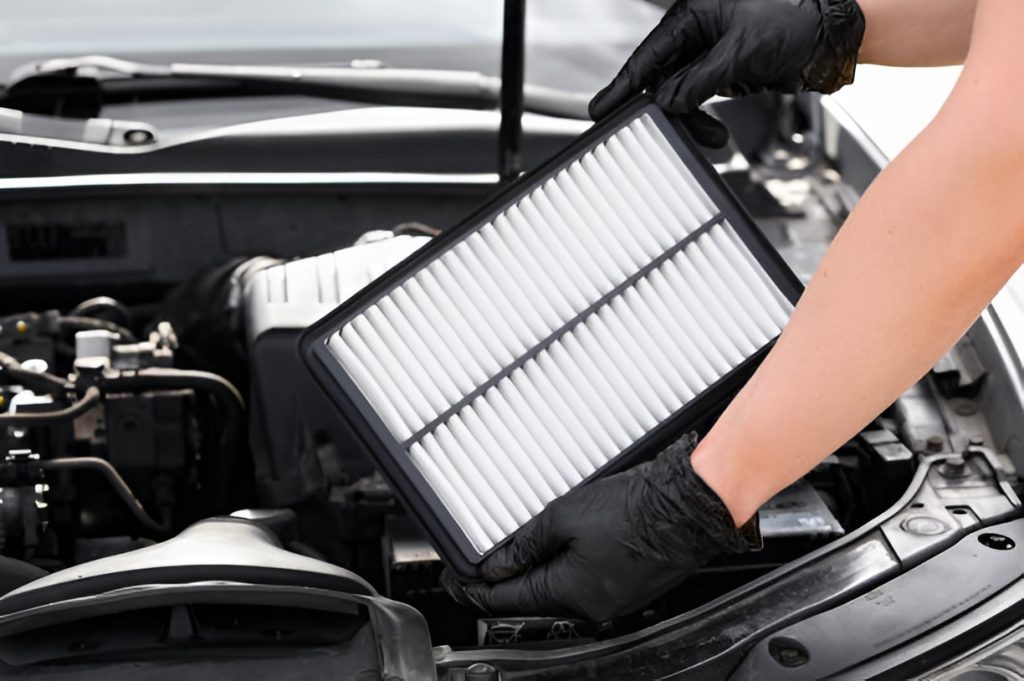
Key Takeaways:
- A general replacement guideline is every 12,000–15,000 miles, but the ideal interval varies significantly depending on driving conditions and environment.
- Driving conditions heavily impact lifespan—dusty roads, heavy city traffic, and polluted environments require more frequent air filter changes than highway driving.
- A clogged air filter can lead to noticeable performance issues such as poor fuel economy, sluggish acceleration, rough idling, and increased engine strain.
- Warning signs like black exhaust smoke, reduced mileage, and visible dirt buildup indicate the filter is already restricting airflow and needs replacement.
- Regular inspection during routine maintenance (such as oil changes) helps prevent engine issues and ensures optimal long-term performance.
- Consistent air filter maintenance not only improves daily driving performance but also extends engine lifespan and helps avoid costly repairs.
Your car’s engine needs to breathe just like you do. And the air filter is what makes sure that the air going into the engine is clean and free from dust, dirt, and debris. It may be a small, inexpensive part, but it has a big impact on how your vehicle performs day to day.
When the air filter gets dirty or clogged, airflow to the engine becomes restricted. That leads to poor combustion, reduced fuel efficiency, sluggish acceleration, and over time, unnecessary strain on the engine. The frustrating part is that many drivers don’t even realize their air filter is the issue until performance noticeably drops.
That’s why understanding how often to change air filter in car for optimal engine performance is one of the simplest but most important maintenance habits you can develop as a car owner.
How Often Should You Change Air Filter in Car for Optimal Engine Performance?

There isn’t a single fixed answer for every driver, but there is a widely accepted guideline. Most manufacturers and mechanics recommend changing your engine air filter every 12,000 to 15,000 miles, or about once a year.
However, the real answer to how often to change air filter in car for optimal engine performance depends heavily on your driving conditions.
Here’s a more accurate breakdown:
- Normal driving conditions: 12,000–15,000 miles
- Dusty or polluted environments: 6,000–10,000 miles
- Heavy city traffic with frequent stops: 10,000–12,000 miles
- Highway driving in clean air conditions: up to 15,000–20,000 miles
The key takeaway is that your environment matters just as much as your mileage.
What Happens If You Delay Air Filter Replacement?
Delaying air filter replacement doesn’t cause immediate failure, which is why many drivers ignore it. But over time, performance issues slowly build up.
If you don’t follow a proper schedule for how often to change air filter in car for optimal engine performance, you may experience:
- Reduced fuel efficiency
- Weak acceleration and throttle response
- Rough or uneven idling
- Increased emissions
- Dirt buildup on engine components
- Long-term engine wear and stress
In severe cases, a completely clogged filter can cause the engine to struggle for air, which forces it to burn more fuel and work harder than necessary.
What Are the Warning Signs of a Dirty Air Filter?
Even if you’re not tracking mileage, your car often gives clear warning signs that the air filter needs attention. Recognizing these signs can help you determine how often to change air filter in car for optimal engine performance based on real-world symptoms.
Watch for the following:
- Noticeable drop in fuel efficiency
- Sluggish acceleration or delayed response
- Black smoke coming from the exhaust
- Engine misfires or rough idling
- A visibly dirty or darkened air filter
- In some cases, a check engine light
If you notice more than one of these symptoms, it’s a strong indicator that the filter is restricting airflow.
How Driving Conditions Affect Air Filter Lifespan
Your driving environment plays a major role in determining how often to change air filter in car for optimal engine performance. Some conditions cause filters to clog much faster than others.
City Driving Conditions
Urban driving exposes your vehicle to constant stop-and-go traffic, exhaust pollution, and dust stirred up by other vehicles. This leads to faster buildup in the air filter.
Dusty or Rural Roads
If you often drive on unpaved roads or areas with loose soil and dust, your air filter works overtime. It can become clogged significantly faster than average.
Highway Driving
Highway driving is generally easier on air filters because the air is cleaner and airflow is more consistent. Filters tend to last longer in these conditions.
Coastal or Humid Areas
Salt and moisture in the air can also contribute to gradual filter degradation and contamination over time.
Does a Dirty Air Filter Affect Fuel Economy?
Yes, and often more than drivers expect. A clogged air filter reduces the amount of oxygen entering the engine. When that happens, the engine compensates by burning more fuel to maintain performance.
This is why understanding how often to change air filter in car for optimal engine performance is also closely tied to fuel savings.
In some cases, replacing a dirty air filter can improve fuel efficiency by up to 10%, depending on the vehicle and driving habits.
What Types of Car Air Filters Are There?
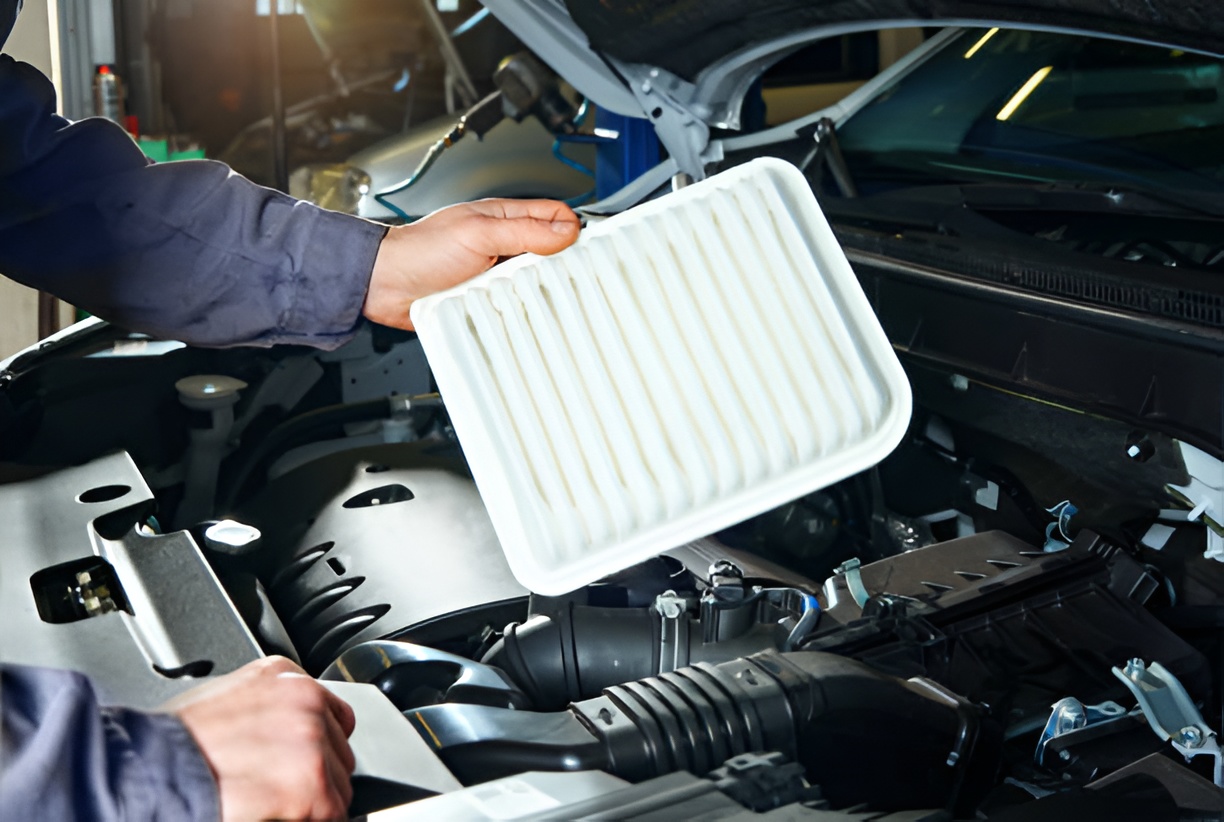
Not all air filters are designed the same way, and the type your car uses can influence how often it needs replacement.
Paper Air Filters
- Most common type
- Affordable and widely used
- Disposable and must be replaced regularly
Cotton Air Filters
- Often reusable and washable
- Better airflow than paper filters
- Higher upfront cost but longer lifespan
Foam Air Filters
- Common in off-road or performance vehicles
- Excellent for dusty environments
- Require regular cleaning and maintenance
Knowing your filter type helps you follow a more accurate maintenance schedule.
Should You Clean or Replace Your Air Filter?
This depends entirely on the type of filter installed in your car.
- Paper filters: Always replace, never clean
- Cotton or foam filters: Can be cleaned and reused if maintained properly
However, even reusable filters have limits. Over-cleaning or improper cleaning can damage the material and reduce efficiency.
When in doubt, replacement is usually the safer and more reliable option.
How Can You Check Your Air Filter at Home?
You don’t need mechanical experience to inspect your air filter. It’s one of the easiest DIY car maintenance tasks and can be done in just a few minutes.
Here’s how you can check it:
- Open your car’s hood
- Locate the air filter box (usually a black plastic casing)
- Release the clips or screws
- Remove the filter carefully
- Hold it up to a light source
If light passes through easily, the filter is still usable. If it looks dark, clogged, or you can’t see through it, it’s time for a replacement.
At this point, many car owners also start learning how to change car air filter properly so they can handle replacements themselves instead of relying on a mechanic.
Regular inspection helps you better understand how often to change air filter in car for optimal engine performance based on actual condition rather than guesswork.
What Happens If You Replace the Air Filter Too Often?
While replacing a dirty filter is important, over-replacing a still-clean filter isn’t necessary.
Here’s what to keep in mind:
- It adds unnecessary maintenance costs
- You may not notice any performance difference
- It doesn’t significantly harm the vehicle, but it’s wasteful
That said, air filters are relatively inexpensive, so being slightly proactive is better than waiting too long.
How Does Air Filter Maintenance Impact Engine Longevity?
A clean air filter helps maintain proper air-fuel balance in the engine. This improves combustion efficiency and reduces stress on internal components.
Over time, this leads to:
- Reduced carbon buildup inside the engine
- Improved throttle response
- Lower risk of overheating
- Longer engine lifespan
This is why understanding how often to change air filter in car for optimal engine performance is not just about short-term driving comfort, but long-term reliability.
What Do Mechanics Recommend?
Most mechanics recommend checking your air filter every time you change your oil, typically every 5,000 to 10,000 miles.
General advice includes:
- Replace at least once a year for average drivers
- Inspect more frequently in dusty or urban environments
- Replace immediately if visibly dirty or damaged
Routine checks make it easier to stay ahead of performance issues.
How Can You Extend Your Air Filter’s Lifespan?
While replacement is unavoidable, you can slow down how quickly your filter gets dirty with a few simple habits:
- Avoid tailgating dusty vehicles or trucks
- Park in covered or cleaner areas when possible
- Keep your engine bay clean
- Follow regular maintenance schedules
- Replace cabin filters on time to reduce overall system strain
Small habits like these can help you get the most out of each air filter.
Wrapping It Up
There is no one-size-fits-all schedule, but a good baseline is every 12,000 to 15,000 miles under normal conditions. From there, your driving environment and habits determine whether you need to replace it sooner or later.
The most reliable approach is simple:
Check it regularly, replace it when it looks dirty, and pay attention to your car’s performance.
By doing so, you maintain better fuel efficiency, smoother driving, and a healthier engine over the long run.