
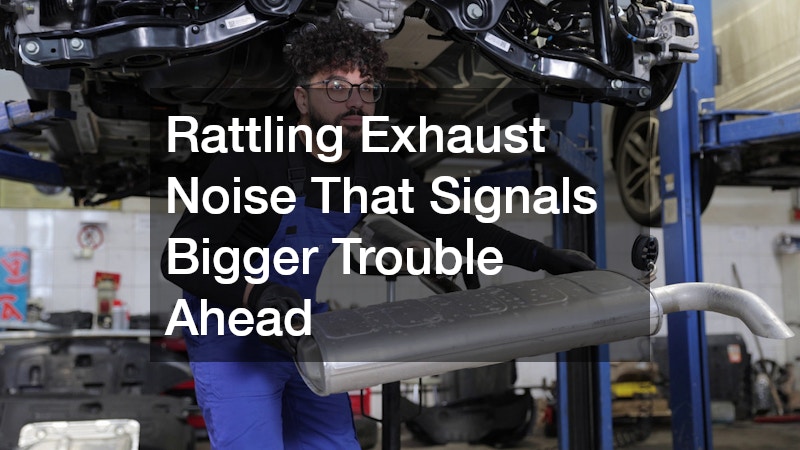
A rattling noise from underneath your car is easy to ignore, especially if it comes and goes or only shows up when you hit a bump. But that metallic clanking or buzzing sound is often your vehicle’s way of warning you about a problem that will only get worse and more expensive if left alone. Understanding what causes exhaust rattles can help you catch small issues before they turn into major repairs. This guide breaks down the most common culprits, what they mean for your car, and when it is time to get a professional opinion.
Loose Heat Shields and Metallic Buzzing
One of the most common sources of exhaust rattle is a loose or corroded heat shield. These thin metal shields wrap around the exhaust pipe, catalytic converter, and muffler to keep heat away from the fuel lines, wiring, and the vehicle’s undercarriage. They’re typically held in place with small spring clips, bolts, or spot welds, and because they sit so close to the road, they take a constant beating from moisture, road salt, and debris. Over time, that exposure causes the clips or welds to rust through or snap outright. Once the shield loses its secure mounting, it starts to vibrate against the pipe every time the engine runs, producing a buzzing or rattling sound that’s especially noticeable at idle and tends to grow louder under acceleration or when driving over bumps. This kind of noise is rarely dangerous on its own, but it’s easy to underestimate. A shield that’s flapping loose can eventually crack, fall partially off, or rub a hole through the exhaust pipe itself, turning a minor annoyance into a costlier repair. In some cases, a loose shield can even droop low enough to scrape the ground or get caught on debris during a highway drive. Diagnosing the issue usually just takes a quick visual inspection from underneath the car, or a mechanic tapping on the shield to see if it moves. Fixes are typically inexpensive, ranging from re-clamping or wiring the shield back into place to replacing a badly corroded section for $50 to $150 in most cases. Ignoring it, however, invites more expensive problems down the road as rust spreads to the exhaust pipe or catalytic converter housing underneath.
This is usually one of the less expensive exhaust problems to fix, often costing anywhere from $20 to $150 depending on whether the shield can be re-secured with new clamps or needs full replacement. Because it’s cheap and easy to overlook, many drivers dismiss the buzzing or rattling sound as harmless background noise rather than a warning sign. That assumption can be costly. A heat shield that breaks free completely can drag along the ground at speed, sparking against the pavement or getting caught on a curb, speed bump, or road debris. In some cases, a dragging shield can rip other exhaust components loose or damage the fuel lines and wiring running beneath the vehicle. There’s also a fire and heat-exposure risk to consider. These shields exist specifically to keep exhaust temperatures, which can exceed 500 to 800 degrees Fahrenheit near the catalytic converter, away from nearby plastic components, rubber hoses, and wiring harnesses. Without that barrier, prolonged exposure can warp plastic parts, melt insulation, or in rare cases, ignite dry grass or debris that accumulates underneath the car after parking on a hot exhaust system.
- Rattling that increases with engine speed (RPM) but not necessarily with acceleration or vehicle speed
- Sound that seems to come from underneath the middle or rear of the car, near the catalytic converter or muffler
- Noise that is more noticeable at idle or low speeds, then fades or changes pitch as speed increases
- A buzzing or vibrating quality, as if two loose metal pieces are tapping against each other
- Sound that stops or changes when you tap the accelerator briefly, since engine movement shifts the shield’s position
- Visible rust or a hanging metal shield if you look underneath the vehicle, especially around the shield’s mounting clips or bolts
- Worse rattling on cold mornings, since metal contracts and gaps between the shield and exhaust widen
Broken Exhaust Hangers and Mounts
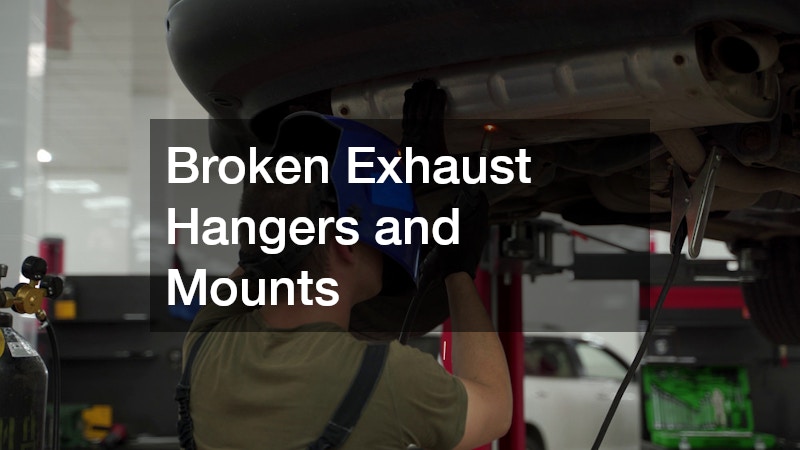
Your exhaust system is suspended beneath the car by a series of rubber hangers and mounts designed to absorb vibration and keep the pipes from banging against the frame. Rubber degrades with age and exposure to road salt, oil, and heat, so these hangers eventually crack or snap. When a hanger fails, the exhaust pipe sags and can knock against the underbody, especially over potholes or speed bumps.
A failed hanger might seem like a simple fix, but a sagging exhaust system can put stress on the joints and welds further up the line. If ignored long enough, that added strain can crack a pipe or separate a joint, turning a cheap repair into a much bigger one.
- Clunking noise over bumps or dips in the road
- Visible sagging exhaust pipe when viewed from the side
- Scraping sounds on steep driveways or speed bumps
- Increased rattling when the car is put into gear
Failing Catalytic Converter Components
A rattle that sounds like loose metal shaking inside the pipe, almost like a maraca, is a classic sign of a failing catalytic converter. Inside the converter is a honeycomb structure coated with precious metals that helps break down harmful emissions, and this structure can crack or crumble due to age, overheating, or being hit by road debris. Once it breaks apart, the loose pieces rattle around every time the engine vibrates.
This is not a problem to put off, since a damaged catalytic converter can restrict exhaust flow, hurt fuel economy, and eventually cause the check engine light to come on. If you suspect this is the issue, a specialized catalytic converter shop can diagnose the damage with a proper inspection and pressure test rather than guesswork. Replacing the converter early often costs less than dealing with the engine performance problems that follow prolonged neglect.
- Rattling that sounds like shaking metal shavings inside a pipe
- Reduced acceleration or a sluggish feeling when pressing the gas
- Sulfur or rotten egg smell from the exhaust
- Check engine light paired with a rattling sound
Loose Muffler Baffles and Internal Components
Mufflers are built with internal baffles and chambers that route exhaust gases to reduce noise. Over time, rust and vibration can cause these internal parts to break loose, and once that happens they bounce around inside the muffler housing every time the car starts or accelerates. This creates a distinct rattling or clanking sound that often seems to come from the very back of the vehicle.
Unlike a heat shield issue, a rattling muffler usually will not resolve itself and tends to get louder over weeks or months. In many cases the muffler cannot be repaired piece by piece, so replacement becomes the practical solution once the internal components have deteriorated significantly.
- Rattling concentrated at the rear of the vehicle
- Noise that grows louder over time rather than staying constant
- A noticeably louder or deeper exhaust tone overall
- Vibration felt through the floor near the back seats
Worn Suspension Parts That Mimic Exhaust Rattles
Not every rattle from underneath the car is actually the exhaust system. Worn suspension components like sway bar links, bushings, or heat shields near the wheel wells can produce similar clanking sounds, especially over rough roads. Because these systems sit close to the exhaust, it can be tricky for an untrained ear to tell the difference without a proper inspection.
Getting an accurate diagnosis matters because chasing the wrong problem wastes time and money. A trip to a trusted auto repair facility allows a technician to put the car on a lift, run the engine while it is raised, and pinpoint exactly where the noise is coming from rather than relying on guesswork. This step is especially useful when the rattle seems inconsistent or only happens under specific driving conditions.
- Rattling that changes with steering input rather than acceleration
- Noise that intensifies over rough or uneven pavement
- Clunking felt through the steering wheel or seat
- Sounds that seem to shift location as you drive
Tire and Wheel Debris Causing False Alarms
Sometimes what sounds like an exhaust rattle is actually something far simpler, like a rock lodged in the tire tread or a loose hubcap. Debris caught between the tire and wheel well can create a rhythmic clicking or rattling noise that speeds up and slows down with the car, which can be mistaken for an exhaust issue at first listen. This is worth ruling out before assuming the worst about your exhaust system.
A quick visual check of your tires can save you an unnecessary trip for exhaust repair. If the noise persists after clearing away visible debris, a tire shop can inspect the wheels, tires, and wheel wells to rule out anything lodged in the tread or a loose wheel weight before you move on to investigating the exhaust system further.
- Clicking or rattling that speeds up with vehicle speed
- Noise that stops when you brake or slow down significantly
- Visible debris stuck in the tire tread
- Rattling that seems to come from one specific wheel rather than underneath the car
A rattling exhaust noise is never something to simply turn up the radio and ignore, since it usually points to a specific, identifiable problem that gets more expensive the longer it sits. Whether the cause turns out to be a loose heat shield, a broken hanger, or something more serious involving the catalytic converter, catching it early keeps repair costs manageable and protects the rest of your vehicle from added strain. If you are unsure where the noise is coming from, having a qualified technician listen to and inspect your car is the fastest way to get a clear answer. Taking action now, rather than waiting for the sound to get worse, is the smartest way to protect both your vehicle and your wallet.